Gynaecological cancers affect the ovaries, cervix, uterus, vagina, and vulva, and surgery is often a key treatment option, especially in early or localised stages. Treatment decisions are based on imaging, biopsy results, and cancer staging to determine the most appropriate approach. Robotic surgery in gynaecological cancers has emerged as an advanced option that enables precise tumour removal while supporting recovery and helping preserve surrounding healthy tissues whenever clinically possible.
Understanding Robotic Surgery in Gynaecological Oncology
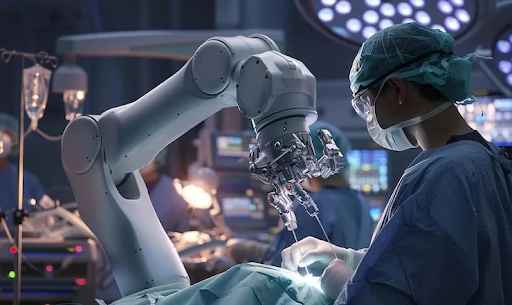
Robotic surgery is a minimally invasive technique where the surgeon operates specialised robotic instruments from a console. These instruments translate hand movements into highly precise actions through small abdominal incisions.
Compared with open surgery, robotic procedures use smaller entry points to access deep pelvic structures. This makes them especially useful in gynaecological oncology. The pelvic region contains closely positioned organs such as the uterus, ovaries, lymph nodes, bladder, and bowel.
The system also offers a magnified 3D view of the surgical field, helping surgeons clearly visualise blood vessels, nerves, and tissue planes during cancer surgery.
Why Does Precision Matter During Cancer Surgery?
Cancer surgery requires more than removing the visible tumour, as surgeons must also assess surrounding tissues and possible disease spread to plan effective treatment.
- Lymph Node Assessment: In cancers such as endometrial or cervical cancer, lymph node involvement may guide decisions on chemotherapy, radiation, or follow-up care.
- Extent of Disease: Ovarian cancer surgery often involves examining pelvic and abdominal structures to determine how far the disease has spread.
- Protection of Ureters: These tubes carry urine from the kidneys to the bladder and must be carefully preserved during surgery.
- Preservation of Blood Vessels: Major pelvic blood vessels that supply the reproductive organs require careful handling.
- Care of Adjacent Organs: The bladder and rectum may be close to tumour sites and need precise separation.
- Nerve Preservation: Pelvic nerves linked to urinary and bowel function are preserved whenever possible.
This level of precision supports complete tumour removal while minimising damage to surrounding healthy structures.
How Robotic Surgery is Changing Treatment Approaches
The benefits of robotic-assisted procedures extend beyond the operating room. Several clinical advantages have contributed to their increasing use in gynaecological oncology, such as:
- Enhanced Surgical Visualisation: High-definition magnification allows surgeons to distinguish healthy tissue from abnormal tissue more accurately.
- Greater Instrument Flexibility: Robotic instruments can perform complex movements within narrow pelvic spaces that may be difficult to achieve with conventional instruments.
- Smaller Incisions: Reduced incision size may decrease wound-related complications and support tissue healing.
- Reduced Blood Loss: Precise tissue handling and improved control of blood vessels can help minimise intraoperative bleeding.
- Lower Surgical Trauma: Limited disruption of surrounding tissues may reduce postoperative inflammation and recovery-related discomfort.
These benefits may contribute to a smoother postoperative recovery for appropriately selected patients.
Gynaecological Cancers Commonly Managed with Robotic Techniques
Robotic surgery is not suitable for all patients or all cancer stages. Treatment decisions depend on detailed clinical evaluation, imaging findings, and overall health status.
- Endometrial Cancer: Often managed with robotic-assisted hysterectomy and lymph node assessment in selected cases.
- Cervical Cancer: Robotic techniques may be used depending on tumour features and treatment goals.
- Ovarian Cancer: Selected procedures may be performed robotically when the extent of disease allows.
- Recurrent Gynaecological Cancers: Some patients may benefit from robotic surgery as part of an individualised plan.
Surgical planning is guided by tumour location, pathology results, and patient-specific clinical factors.
The Importance of Individualised Treatment Planning
Although robotic surgery offers key advantages, treatment decisions are highly individualised based on tumour characteristics and patient factors such as cancer stage, tumour size, previous surgeries, obesity, and other medical conditions.
Care is typically guided by a multidisciplinary team, including:
- Gynaecological Oncologists: Plan surgery and assess cancer stage
- Medical Oncologists: Determine the need for chemotherapy or other systemic treatments
- Radiation Oncologists: Evaluate the role of radiotherapy
- Radiologists: Interpret imaging for accurate diagnosis and planning
- Pathologists: Analyse tissue samples to assess tumour grade and spread
Pathology results also guide further treatment and follow-up planning. At hospitals such as BLK Max Super Speciality Hospital, multidisciplinary teams support complex gynaecological cancer care using advanced surgical and diagnostic approaches.
Conclusion
Advances in minimally invasive surgery are transforming the management of gynaecological cancers. Robotic technology offers enhanced visualisation, precise instrument control, and improved access to complex pelvic anatomy. Accurate diagnosis, cancer staging, and multidisciplinary planning remain essential for effective care. As technology and clinical expertise evolve, robotic surgery in gynaecological cancer supports precise tumour removal. It also helps preserve organ function where appropriate and supports recovery. It further guides long-term treatment decisions.