
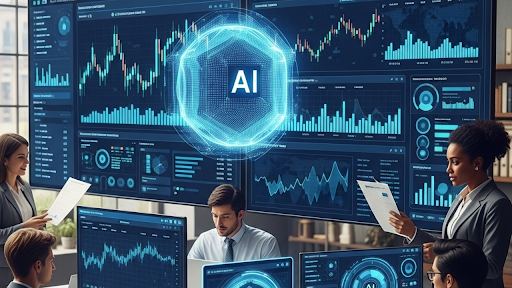
In the world of investing, managing risk is paramount. Investors and financial institutions have always sought tools and strategies to identify, mitigate, and control the risks associated with financial markets. Traditional risk management methods often relied on historical data, financial models, and expert judgment. However, artificial intelligence (AI) and big data have transformed how risk is assessed and managed in the investment world. These technologies offer a new level of precision, speed, and insight, enabling investors to make more informed decisions and respond to potential risks in real-time.
This article will explore how AI and big data revolutionize investment risk management.
1. Predictive Analytics and Improved Decision-Making
AI and big data are revolutionizing predictive analytics in risk management. Traditionally, risk management relied on historical data and static models to predict future trends. These methods had limitations because they didn’t account for the vast amount of real-time, dynamic data available today.
AI-powered predictive models use machine learning algorithms to analyze vast amounts of historical data, including market trends, economic indicators, and company performance metrics. By learning from past data, these models can identify patterns, predict future trends, and anticipate potential risks, such as market downturns or volatility.
For example, AI systems can analyze the correlation between different assets and identify which factors will likely trigger significant price movements. This allows investors to better understand and anticipate risks, helping them adjust their portfolios and mitigate potential losses before they happen. AI for investment management has made predictive analytics more accessible and effective, helping investors optimize their decision-making process.
2. Real-Time Risk Monitoring
One of the most significant ways AI and big data enhance risk management is by enabling real-time risk monitoring. In the past, investors could only assess risks periodically or based on historical data, meaning they had limited insight into ongoing market developments. Today, however, AI systems can monitor financial markets in real time, analyzing vast amounts of data instantly and identifying emerging risks as they unfold.
Big data provides investors with access to a continuous stream of information, including financial statements, news articles, social media sentiment, and global economic events. AI systems instantaneously process and analyze this data, providing up-to-date risk assessments and alerts. For instance, if a major geopolitical event occurs or there’s a sudden shift in market sentiment, AI tools can flag these developments in real time, allowing investors to adjust their strategies quickly.
This ability to monitor risks in real time offers investors a competitive edge, enabling them to respond to potential threats before they escalate. Whether it’s identifying a sudden drop in stock prices or a disruption in the global supply chain, AI and big data help investors make timely decisions to manage risk effectively.
3. Portfolio Risk Optimization
Portfolio risk optimization is another area where AI and big data significantly impact. Investors often build diversified portfolios to reduce risk, but determining the right mix of assets can be a complex and subjective task. AI and big data offer a more scientific approach to portfolio construction by analyzing a wider range of factors and providing more precise risk assessments.
AI algorithms can analyze thousands of asset classes, historical performance data, correlations, and economic factors to optimize a portfolio for risk and return. Machine learning models can also run simulations to predict how different assets will behave under various market conditions. This data-driven approach allows investors to build more resilient portfolios that are better equipped to weather market fluctuations.
Additionally, AI tools can continuously monitor the portfolio’s performance, assessing risk levels in real time. If the risk profile of a portfolio shifts due to changes in market conditions, AI can recommend adjustments to bring the portfolio back in line with the investor’s risk tolerance.
4. Fraud Detection and Prevention
AI and big data are also helping to mitigate risks associated with fraud and financial crimes. Fraud detection has always been a significant concern in investment, particularly in areas like high-frequency trading or financial transactions. Traditional fraud detection methods relied on basic rule-based systems, which could only identify known patterns of fraudulent behavior.
AI, however, can analyze massive datasets in real time, looking for anomalies and suspicious patterns that might indicate fraudulent activity. Machine learning models can identify new and evolving patterns of fraud, even those not previously detected by traditional systems. For example, AI systems can spot irregular trading patterns, insider trading, or other forms of market manipulation by analyzing transaction data, trading volumes, and even external factors like social media sentiment.
With AI-powered fraud detection systems, investors and financial institutions can significantly reduce the risk of financial crimes, protecting their investments and reputations.
5. Risk Assessment in Alternative Investments
In addition to traditional asset classes like stocks and bonds, investors increasingly turn to alternative investments, such as cryptocurrencies, real estate, and private equity. However, these investments often come with higher levels of uncertainty and complexity, making risk assessment more challenging.
AI and big data make assessing risks in alternative investments easier by analyzing unique datasets that were previously difficult to quantify. For example, AI models can analyze blockchain data to assess risks in cryptocurrency markets or evaluate real estate trends by analyzing property values, rental income data, and market demand. By incorporating these alternative datasets into risk models, AI enables investors to make more informed decisions when evaluating non-traditional assets.
Conclusion
AI and big data are transforming the way risk is managed in the world of investments. From predictive analytics and real-time risk monitoring to portfolio optimization and fraud detection, these technologies provide investors with the tools to assess and manage risk more effectively. Integrating AI into risk management strategies enables faster decision-making, better predictions, and more resilient portfolios. As these technologies continue to evolve, we can expect even more sophisticated tools that empower investors to make smarter, data-driven decisions and better navigate the complexities of modern financial markets.
For more information visit : articleholics.com