
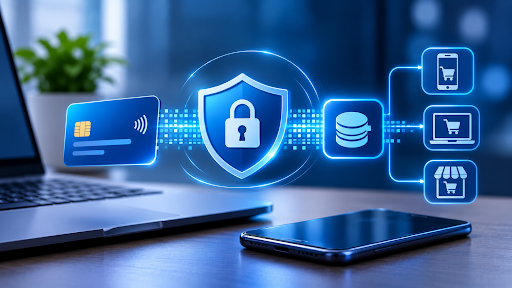
Digital payments allow customers to make purchases through websites, mobile apps, and connected devices. As these transactions grow, protecting payment credentials becomes increasingly important. A tokenization service provider helps secure transactions by replacing sensitive card numbers with payment tokens.
These tokens represent payment credentials within an authorized environment. Their use helps banks, merchants, and payment networks handle transactions while limiting the exposure of original card details. Understanding how tokenization providers operate explains their importance in modern payment security systems.
What Is a Tokenization Service Provider?
A tokenization service provider is an entity authorized under a payment token program to generate and issue payment tokens. These tokens represent payment card numbers and support transactions across approved payment channels, including digital wallets and online shopping platforms.
The provider also maintains relationships between tokens and original card credentials through a secure token vault. It manages token records, supports registered token requestors, and applies program requirements that govern how payment tokens are issued, maintained, and used securely.
How Does a Tokenization Service Provider Work?
Tokenization follows a series of steps that connect authorized payment participants with secure token management systems:
- Token Request: A registered token requestor, such as a digital wallet provider or merchant, submits a request containing the required payment information.
- Request Verification: The provider applies program checks and coordinates with the card issuer when additional verification is required.
- Token Generation: The provider creates a payment token and securely associates it with the underlying card number.
- Token Provisioning: The token and related information reach the authorized wallet, merchant, or payment environment.
- Token Processing: During an eligible transaction, payment systems apply token controls and route the transaction for issuer authorization.
These steps allow payment participants to use tokens within approved transaction environments.
How Do Tokenization Service Providers Improve Payment Security?
Tokenization providers support payment security through several functions that protect credentials and control token usage, such as:
- Reduced Card Data Exposure: Payment tokens replace original card numbers in supported transactions, reducing the circulation of sensitive credentials.
- Token Usage Restrictions: Controls can limit tokens to specific merchants, devices, or payment scenarios.
- Secure Credential Management: Token vaults maintain protected relationships between original card numbers and their corresponding tokens.
- Fraud Risk Reduction: Usage restrictions help reduce the value of exposed tokens for unauthorized transactions.
Together, these functions complement authentication and fraud monitoring measures across payment systems.
What Role Do Tokenization Service Providers Play in Banking and Payment Processing?
Banks use tokenization services to support digital wallet transactions, online card payments, and eligible stored-card arrangements. Token providers coordinate with issuers and payment networks to maintain token information throughout the payment account lifecycle, including credential updates and token status changes.
An issuer processing platform supports card transaction authorization and related issuer operations. Tokenization services work alongside these systems by providing token-related information through applicable payment network processes. This coordination helps financial institutions manage token-based transactions across participating payment channels and services.
What Should Banks Look for in a Tokenization Service Provider?
Banks should assess providers against operational and security requirements, including:
- System Compatibility: Integration with existing payment infrastructure.
- Lifecycle Management: Support for token updates, suspension, and deletion.
- Security Standards: Alignment with applicable payment security requirements.
- Service Availability: Reliable processing and operational support.
These factors help institutions evaluate suitable providers.
Conclusion
Tokenization service providers play an important role in securing digital payments by managing the creation, issuance, and use of payment tokens. Their services help financial institutions protect card credentials while supporting transactions across authorized payment channels and connected systems.
As digital payment methods continue to develop, tokenization remains an important part of payment security. Banks and payment providers can assess token management capabilities, integration requirements, and security controls to support dependable payment operations and customer experiences.