
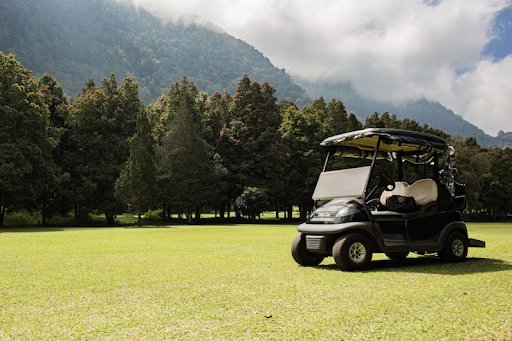
The battery system in a golf cart is the single most important component determining its range, reliability, and long-term operating cost. Whether you use your cart on the course, around a community, at a resort, or in an industrial facility, understanding how to choose the right golf cart batteries directly affects how well your vehicle performs and how much you spend maintaining it over its lifetime. This guide covers the major battery technologies available, their real-world performance differences, and the key factors to weigh when making your selection.
How Golf Cart Batteries Work
Golf cart batteries are deep cycle batteries — designed to be discharged to a significant depth and then recharged, repeatedly, over hundreds or thousands of cycles. Unlike starting batteries, which deliver a brief burst of high current to start an engine, deep cycle golf cart batteries sustain a continuous, moderate current draw over an extended period, powering the cart’s drive motor, lights, and accessories throughout a full day of use.
Golf carts typically run on 36V or 48V battery pack configurations, assembled from individual 6V, 8V, or 12V batteries wired in series. The total pack voltage and amp-hour capacity determine the cart’s range and performance.
Traditional Lead-Acid Golf Cart Batteries
Flooded lead-acid (FLA) batteries have powered golf carts for decades and remain the most widely installed technology in the market. They are relatively inexpensive, widely available, and compatible with all standard golf cart charging systems. However, FLA batteries require regular maintenance — periodic water top-up to replace water lost through electrolysis during charging — and are sensitive to overcharging, deep discharge, and temperature extremes.
A properly maintained set of FLA golf cart batteries typically delivers 4 to 6 years of service life with 500 to 800 charge cycles. Neglected or frequently over-discharged FLA batteries may fail significantly earlier. AGM (Absorbent Glass Mat) lead-acid variants offer the same chemistry in a sealed, maintenance-free format, extending usable life modestly while eliminating watering requirements.
Lithium Golf Cart Batteries: The Performance Upgrade
Why Lithium Has Changed the Golf Cart Battery Market
A lithium battery for a golf cart — specifically LiFePO4 (Lithium Iron Phosphate) chemistry — delivers a set of performance characteristics that lead-acid technology fundamentally cannot match. The transformation is not incremental — it is categorical.
Usable Capacity and Range
Lithium golf cart batteries can be safely discharged to 80–90% of their rated capacity, compared to 50% for lead-acid. This effectively doubles the usable energy available from the same nominal battery rating. The real-world result is significantly greater range per charge — a meaningful advantage for full-day course use, resort operations, or extended community driving.
Consistent Power Output
Lead-acid batteries experience a progressive voltage sag as they discharge, which causes the cart’s performance (speed and torque) to decline noticeably over the course of a day. Golf cart lithium batteries maintain a near-flat voltage profile throughout the discharge cycle, delivering consistent speed and responsiveness from the first hole to the last. This consistency is particularly valued in course fleet applications where uniform cart performance across the fleet is important.
Cycle Life and Long-Term Cost
LiFePO4 golf cart lithium batteries are typically rated for 2,000 to 5,000+ cycles at 80% depth of discharge — compared to 500 to 800 cycles for lead-acid. Over the operational life of a cart, a single lithium battery pack may outlast three to five lead-acid replacements, significantly reducing total cost of ownership despite the higher upfront purchase price.
Weight Reduction
A standard 48V lead-acid golf cart battery pack weighs approximately 270 to 340 pounds. A comparable lithium pack weighs 60 to 80 percent less — typically 90 to 130 pounds. This dramatic weight reduction improves cart performance, range, and handling, and reduces wear on tires, brakes, and suspension components.
Charging Golf Cart Batteries
FLA batteries require an automatic charger that provides a proper three-stage (bulk, absorption, float) charge profile to maximize cycle life and prevent plate sulfation. Lithium golf cart batteries require a lithium-specific charger — standard lead-acid chargers will not deliver the correct charge termination profile and may damage lithium cells or fail to fully charge them. Most quality lithium packs include integrated BMS protection, but a compatible charger remains essential.
Conclusion
The right golf cart battery choice depends on your usage patterns, budget, and performance priorities. For fleet operators, resort properties, and individual owners who value maximum range, consistent performance, and lowest total ownership cost, lithium golf cart batteries represent a compelling long-term investment. For owners with lighter use requirements and cost constraints, a quality AGM lead-acid option remains a viable alternative. Whichever technology you choose, proper charging practice and regular system inspection are the keys to maximizing battery lifespan.