
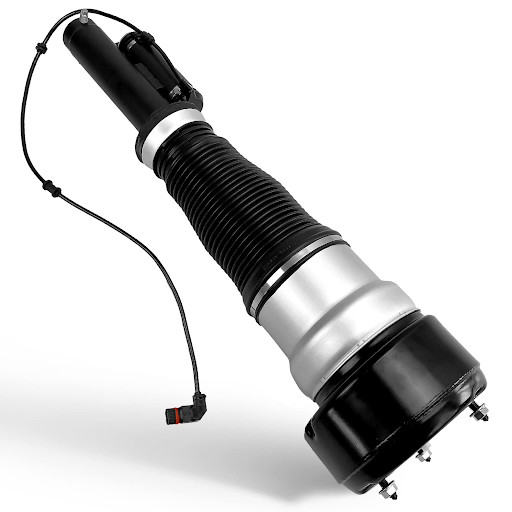
You pull into a parking spot, glance back at your Mercedes, and notice something off. One corner sits noticeably lower than the others. It’s not your imagination, and it’s not something to put off fixing. Air suspension problems rarely stay small, and uneven ride height is usually the first visible sign that something in the system needs attention. Before you start shopping blindly, it helps to understand what’s actually going wrong, which is where a proper Mercedes air suspension parts catalog becomes genuinely useful, letting you match the right component to your exact model rather than guessing.
How Mercedes Air Suspension Is Supposed to Work
Mercedes air suspension, whether it’s the Airmatic system found on E-Class, S-Class, and GLE models, or Active Body Control on higher trims, uses air-filled springs at each wheel instead of traditional steel coils. A compressor pumps air into these springs, and electronic sensors constantly adjust pressure to keep the car level, whether you’re loading up the trunk or cornering hard on the highway.
When everything works as designed, the ride stays smooth, and the car sits evenly, regardless of load or road surface. The complexity that makes this system so comfortable is also what makes it vulnerable. More moving parts, more seals, more electronics, all mean more potential points of failure, and when one corner starts failing before the others, uneven ride height is the result.
The Most Common Culprits
Here are the common culprits behind uneven ride height: leaking air springs, faulty height sensors, a weakened compressor, damaged air lines, and malfunctioning valve blocks that disrupt suspension pressure distribution.
Failing air springs
Over time, the rubber bellows in an air spring can crack, dry out, or develop pinhole leaks, especially in the UAE’s intense heat, which accelerates rubber degradation. A leaking spring can’t hold air pressure, so that corner of the car slowly sinks, often overnight or after the car has been parked for a while.
A struggling compressor
The air compressor is the heart of the system, and as it ages, it can lose efficiency or fail to build pressure fast enough to keep all four corners level. A compressor on its way out often shows symptoms like a slow rise after startup or a car that sits low in the morning and levels out once it’s been running for a few minutes.
Leaking air lines or fittings
The lines connecting the compressor to each spring can crack, loosen or corrode over time. A leak in one line affects only that corner, which is exactly why you might notice one side sitting lower while the rest of the car looks normal.
Faulty height sensors
Each wheel typically has a sensor that tells the system how high that corner is riding. A sensor that’s stuck, disconnected, or sending inaccurate readings can confuse the system into over- or under-inflating a specific spring, even if the spring itself is fine.
A failing valve block
The valve block controls airflow to and from each air spring, maintaining balanced suspension pressure. When a valve sticks or malfunctions, one corner may receive insufficient air or lose pressure, causing uneven ride height. Consulting a Mercedes air suspension parts catalog can help identify compatible replacement components for accurate repairs and reliable suspension performance.
Reading the Warning Signs Early
Uneven ride height rarely appears without warning. Watch for a dashboard suspension warning light, a noticeably bumpier ride on one side, an audible hissing sound near a wheel well, or a compressor that seems to run constantly, working overtime to compensate for a leak elsewhere. Catching these signs early, before the compressor burns itself out trying to keep up with a leak, can save you from a far more expensive repair down the line.
Diagnosing the Actual Source
Because several components can cause the same symptom, proper diagnosis matters more than guesswork. A technician will typically check system pressure at each corner, inspect air springs visually for cracking or bulging, listen for air leaks around fittings and lines, and run diagnostic software to check sensor readings and stored fault codes. Skipping this step and simply replacing the most obvious-looking part can mean paying for a repair that doesn’t actually fix the problem.
Selecting The Right Replacement Parts
Once the actual cause is identified, sourcing the correct replacement matters just as much as the diagnosis itself. Mercedes air suspension components vary significantly between chassis codes and model years, so a part that fits a W212 E-Class won’t necessarily fit a W213. Working from a detailed catalog organized by chassis and year takes the guesswork out of ordering, and for owners in the UAE dealing with heat-accelerated wear, finding reliable Mercedes air suspension repair in Dubai options that stock genuine-fit parts rather than generic substitutes makes a real difference in how long the fix actually lasts.
Preventing the Problem From Returning
A few habits help extend the life of a repaired system: avoid consistently overloading the vehicle, park in shade when possible to reduce heat exposure to rubber components, and address small leaks immediately rather than letting the compressor compensate for months. Air suspension systems are designed to be durable, but they reward attentiveness far more than neglect.
Conclusion
Uneven ride height in a Mercedes air suspension system almost always traces back to one of a handful of causes: a failing spring, a tired compressor, a leaking line, a faulty sensor, or a sticking valve. Proper diagnosis is the key step that prevents wasted money on the wrong part, and sourcing the correct component for your specific model keeps the fix lasting. Whether you’re handling the repair yourself or searching for trusted Mercedes air suspension repair Dubai specialists, getting both the diagnosis and the part right is what finally levels things out, literally and otherwise. Beta Auto Spare Parts is a UAE-based distributor of genuine and aftermarket Mercedes components, including air suspension parts, body panels and lighting, helping owners source correctly fitted replacements by exact chassis and model year.